
The Stirling Business Podcast
Food For The Final Frontier
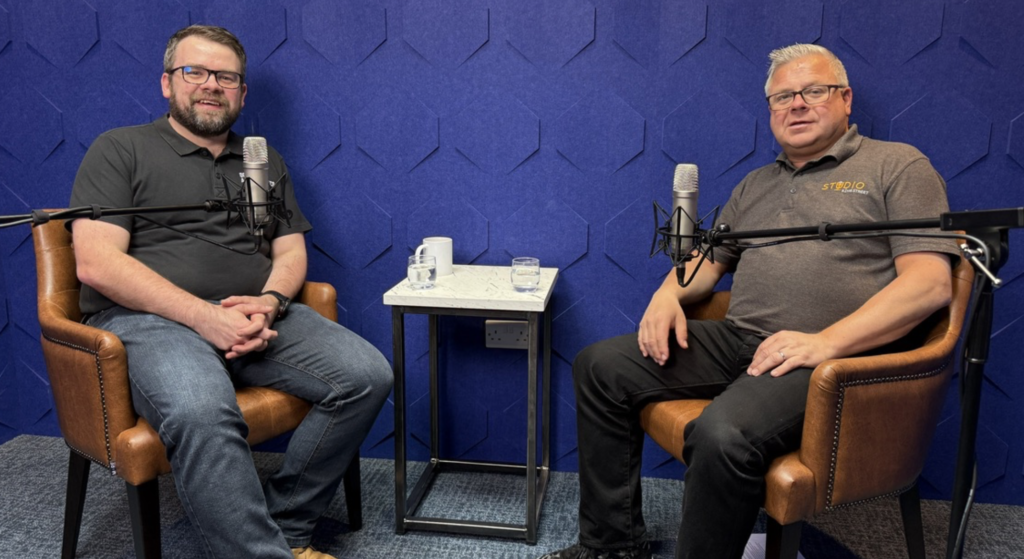
Neil Munday from Studio King Street, the Host of The Stirling Business Podcast, speaks to Stuart Preston, founder of Okal Astronautics
Fresh food sounds simple until you remove the basics: reliable supply chains, clean power, storage, and time. On the Sterling Business Podcast, we speak with Stuart Preston, founder of Okal Astronautics, about ag tech designed for extreme environments where nutrition and morale can drop fast. The conversation links military deployments, disaster response, and space agriculture through one practical idea: controlled environment growing that works anywhere. This is not lifestyle gardening or a kitchen gadget trend. It is resilient food systems engineering, built for regulated sectors where failure is costly and logistics are unforgiving.
Stuart’s route into the startup world begins as an Air Force aircraft engineer, followed by roles in banking and a major defence firm. That background shapes the company’s hardware-first mindset: rugged, portable, and designed to be used by people who are not horticulture experts. Okal Astronautics positions itself as an agriculture technology business that can deliver fresh produce with automation, so users “pick and eat” rather than manage complex growing variables. The core problem is human as much as technical: repetitive meals hurt performance, energy, and motivation, especially in high-stress environments.
The product set shows how modern controlled environment agriculture is turning into deployable equipment. Okal’s plug-and-play plant pods combine a growth medium and seeds into a simple unit that fits their devices, making crop choice flexible without adding complexity. Their current flagship, Rugged Garden, is a portable personal food growth chamber built around durability and ease of use, backed by firmware and an accompanying app. Looking ahead, Botanic Sky targets space food production, building on what the International Space Station has proven in research and pushing towards commercialisation for long-duration missions.
Space, defence, and disaster relief also bring regulation, procurement friction, and long sales cycles. Stuart explains how relationships and supply chains form in the space ecosystem through events, champions, and repeated networking, including introductions that led to conversations with senior NASA stakeholders. Funding follows a similar learning curve: early “spray and pray” outreach to venture capital failed, then a more focused investor approach emerged after securing an R&D commercial grant and building demonstrable prototypes. The company’s strategy centres on lean engineering, rapid prototyping, and fast iteration, because commercial space stations and Moon mission timelines create urgency.
Scaling hardware means manufacturing partners, components like PCBs, and enclosures that cannot be hand-built one unit at a time. The discussion highlights practical choices: battery-backed mains power today and a move towards solar power for field operations tomorrow. We also explore how AI tools help a hardware engineer accelerate software development, shifting from slow learning curves to “build, test, fix” cycles that fit agile delivery. Underneath the space story is a grounded business case: grow fresh, nutritious food where it is hardest to get, and build a product pathway from portable deployment kit to space-grade systems